Malegijs 
What does Malegijs mean?
The name refers to the legend of the little horse Malegijs and was chosen partly by chance.
The legend
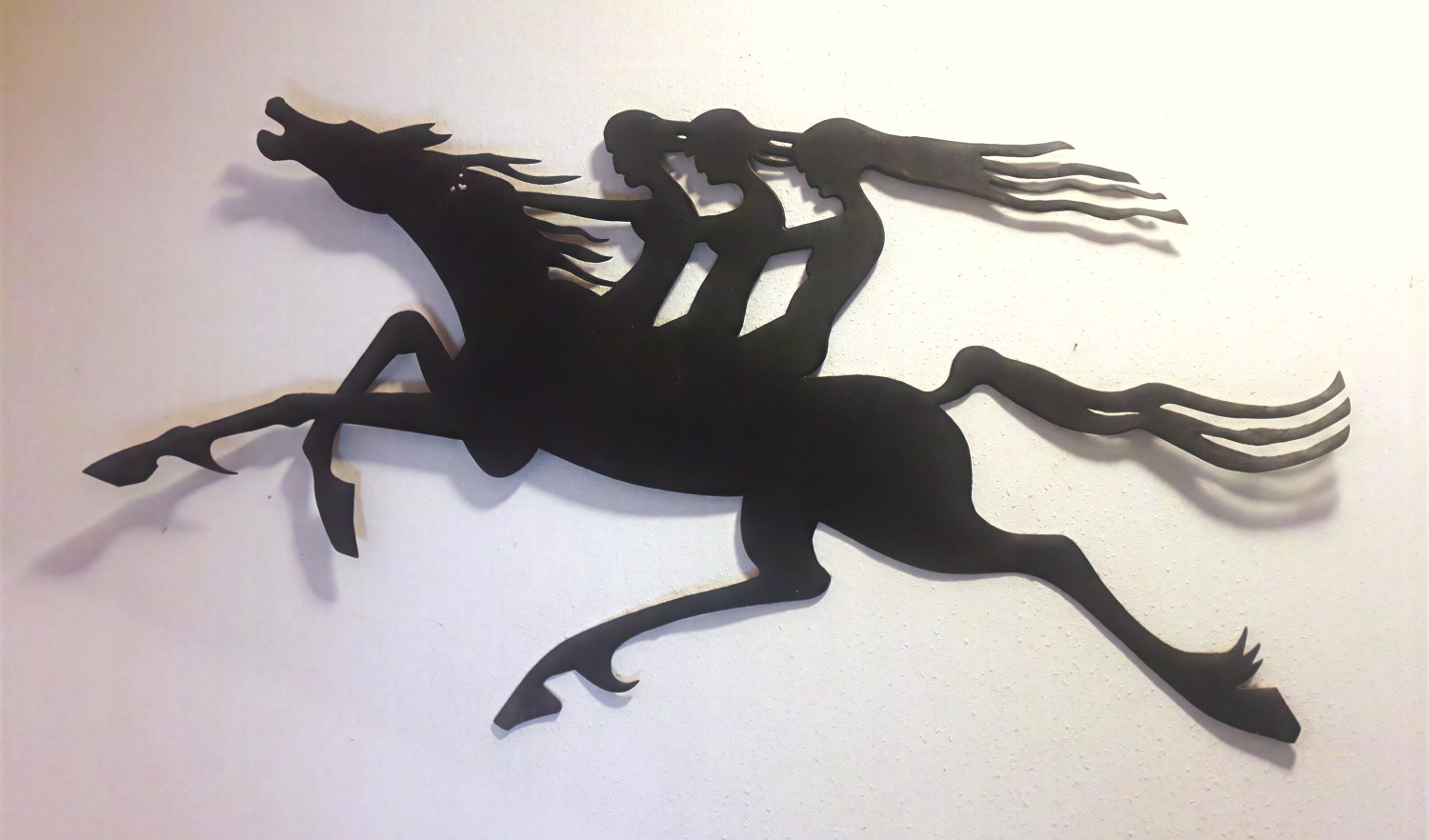
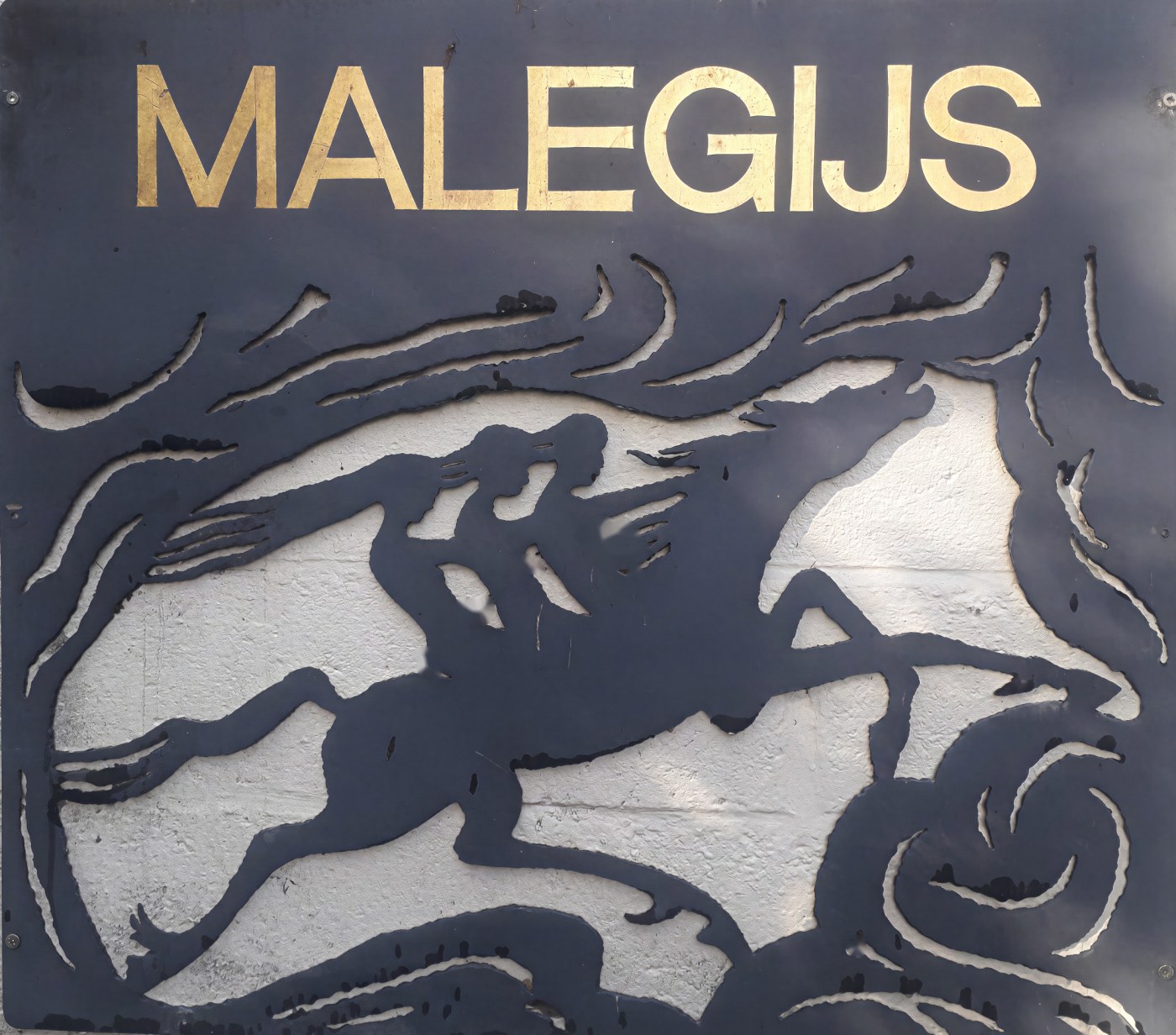
Malegijs (Maugis) is a knight and magician from old tales. Around Kemmel the legend of “Malegijs’ little horse” is told: a small, white, richly decorated horse that was found in Ypres in 1521, rearing and riderless. Three girls from the neighbourhood were allowed to ride it. The horse carried them to a castle, where a lord tricked them out of their belongings in a card game. They woke up in a pit on the Kemmelberg. That pit is called the Kinderput (“Children’s Pit”); a plaque commemorates it. In Kemmel there is also a bronze statue of the little horse with the three girls on its back.
The Opbouwwerk Heuvelland
In the mid-1960s the Heuvelland, right against the French border, lay in a social and economic backwater. Jan Hardeman and Marieke Demeester started the Opbouwwerk Heuvelland (a regional community-development project) in Kemmel in 1966, following a Dutch example: an activating approach in which the region itself looked for its problems and possibilities, and itself set to work. The project wanted the region’s economic transformation to go hand in hand with a change of mentality and with self-help by the population. It was later regarded as a prototype of regional community development in a disadvantaged, rural area. In 1980 Jan Hardeman, and in his name the Opbouwwerk Heuvelland, received the first State Prize for socio-cultural work.
The Streekhuis Malegijs
When in 1966 we were looking for premises in Kemmel for the Opbouwwerk Heuvelland, we found a vacant building that bore the name Malegijs. It had previously been a café and butcher’s shop. The owner was very interested in the cultural heritage of the region and had given his café-butcher’s shop the name Malegijs. A beautiful but dilapidated wrought-iron sign hung there, with the little horse and the three girls on its back. We thought the name was beautiful too, and so the secretariat of the Opbouwwerk Heuvelland became the Streekhuis Malegijs (“Malegijs Regional House”).
The publishing house
The name Malegijs was also used for the small publishing house that published several important books, such as “Van den Grooten Oorlog” and “Témoignages de la Grande Guerre”.
The circus tent in the villages
The Opbouwwerk also brought culture to the villages. Instead of sending villagers to cultural centres in the cities, a real circus tent of the Wiener Circus was taken from village to village in the Heuvelland. Under that tent, besides the circus itself, classical music (Orchestre National de Lille), modern music (Raymond van het Groenewoud) and theatre (a monologue by Jan Decleir) came to the foot of the church tower.
Malegijs vzw today
Today the vzw Malegijs continues the work of the 11 November Group: distributing the book, keeping the testimonies alive and, with the films, bringing them to a new audience.